
-
Wishlist
All out of wishes!
Tell me your dreams! -
0 Total 0.00Loading
Single duvets measure 135cm by 200cm or approximately 53 inches by 78 inches. Our single duvet cover sets come with a single pillowcase, however you can purchase extra pillowcases separately.
Single duvets are of course a lot smaller than other duvet sizes available, making them ideal for children’s beds. They are easy to roll up and store away too, so they can be used for temporary beds when family come to stay.

Double beds measure 200cm by 200cm or approximately 78 inches by 78 inches. The square size makes it easy to put the duvet cover on as there is no right way up.
Double duvets are generally used for the 4ft 6-inch-wide double bed, but you can also use it on a 4ft wide small double bed if you prefer the duvet to overhang.
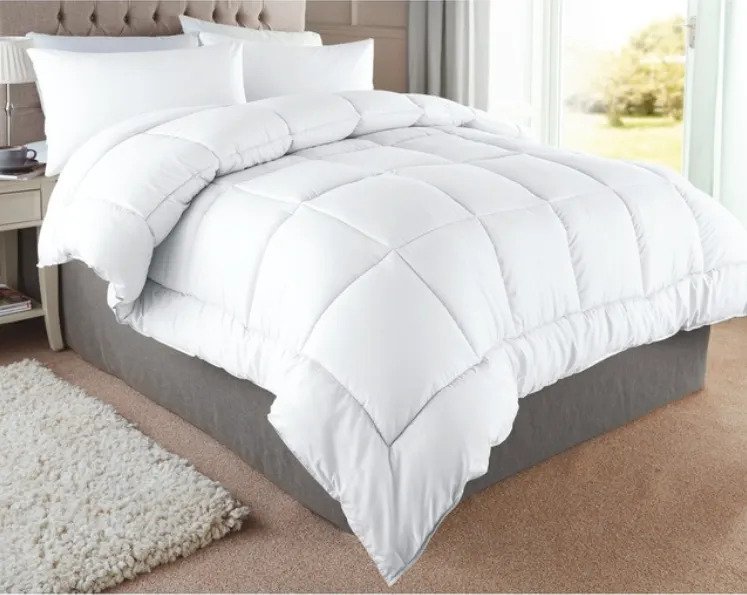
King size duvets measure 230cm by 220cm or approximately 90 inches by 86 inches and match perfectly with a UK king size bed measuring 5ft by 6ft 6 inches.
King size duvets can also be used on European king beds and California king beds.
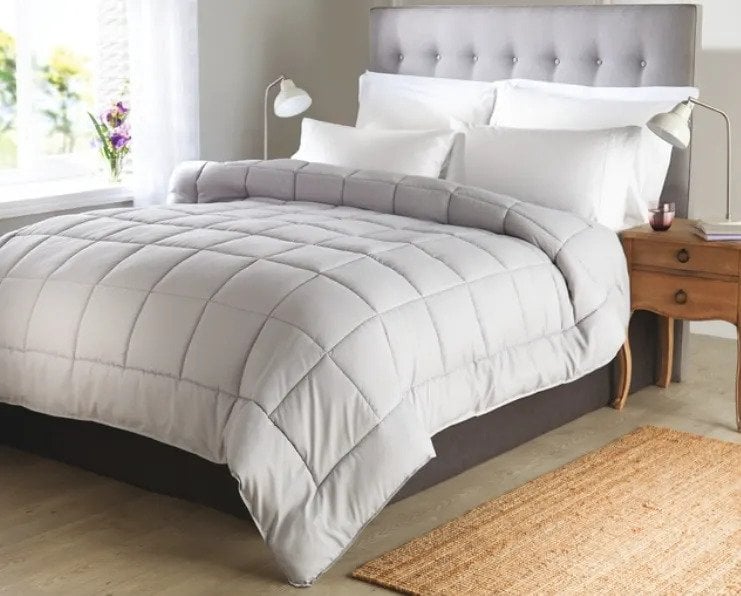
Super king duvets measure 260cm by 220cm or approximately 102 inches by 86 inches which is slightly wider in width than the king size duvet.
Super king duvets are the biggest standard UK duvet size available and are generally known for their incredibly spacious and luxurious size.
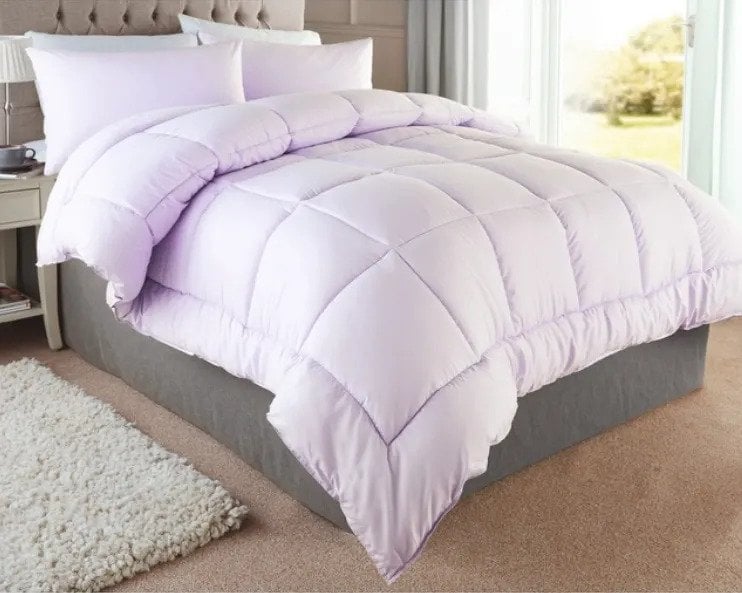
In the UK, duvet sizes match the size of usual bed sizes. They’re made slightly larger than the mattress to hang comfortably over the edge. It makes it simple to choose the size for a bed, i.e., a single duvet will fit a single mattress. See sizes below:
Duvet Sizes
Mattress Size
Single:
W135 x L200cm
W90 x L190cm
Double:
W200 x L200cm
W135 x L190cm
King:
W230 x L200cm
W150 x L200cm
Super King:
W260 x L220cm
W180 x L200cm
Duvet covers are slightly larger than the mattress and duvets they
pair with. They accommodate the fill of the duvet, but keep a
snug fit.
When you buy a duvet set, single sizes will come with one
pillowcase, while double and up will come with two.
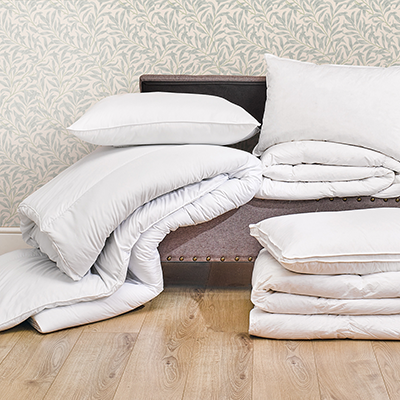
We offer duvets with a range of fillings
Down
Down duvets are filled with the soft feathers from the underside of ducks or geese. These duvets are the most expensive, and can last up to twice as long as duvets with synthetic fillings. They are not hypoallergenic, so unsuitable for people with sensitivities.
Feather
This filling is made up of the outer feathers of ducks and geese, from back or wings. Luxuriously weighty, and favoured by many, they should be aired on the washing line from time to time and need professional laundering.
Synthetic
Generally lower in price than feather-filled duvets, synthetic duvets are made from polyester. Ideal for allergy sufferers, they can be washed and dried at home or at the launderette. Polyester is not as breathable as natural materials, so might not be comfortable if you have night sweats.
Microfibre
Usually more affordable than other duvets, microfibre duvets are
also warm and super lightweight. The fibres are woven together
in such a way that warmth is held in without the weight of down
or feathers. However, they are less durable, and as they’re highly
absorbent can be prone to staining.
Our microfibre duvet range is designed with a peached
finish so it doesn't need a cover. Used with a topsheet, they can
be used like a vintage eiderdown and come in a range of colours
How often should a duvet be replaced?
A duvet should be replaced every 2 to 5 years, and there are are ways to extend the life. Aim to wash your duvet every few months to keep it in good condition.